Fruit
Strawberries
Future interest · not part of the planned launch crops
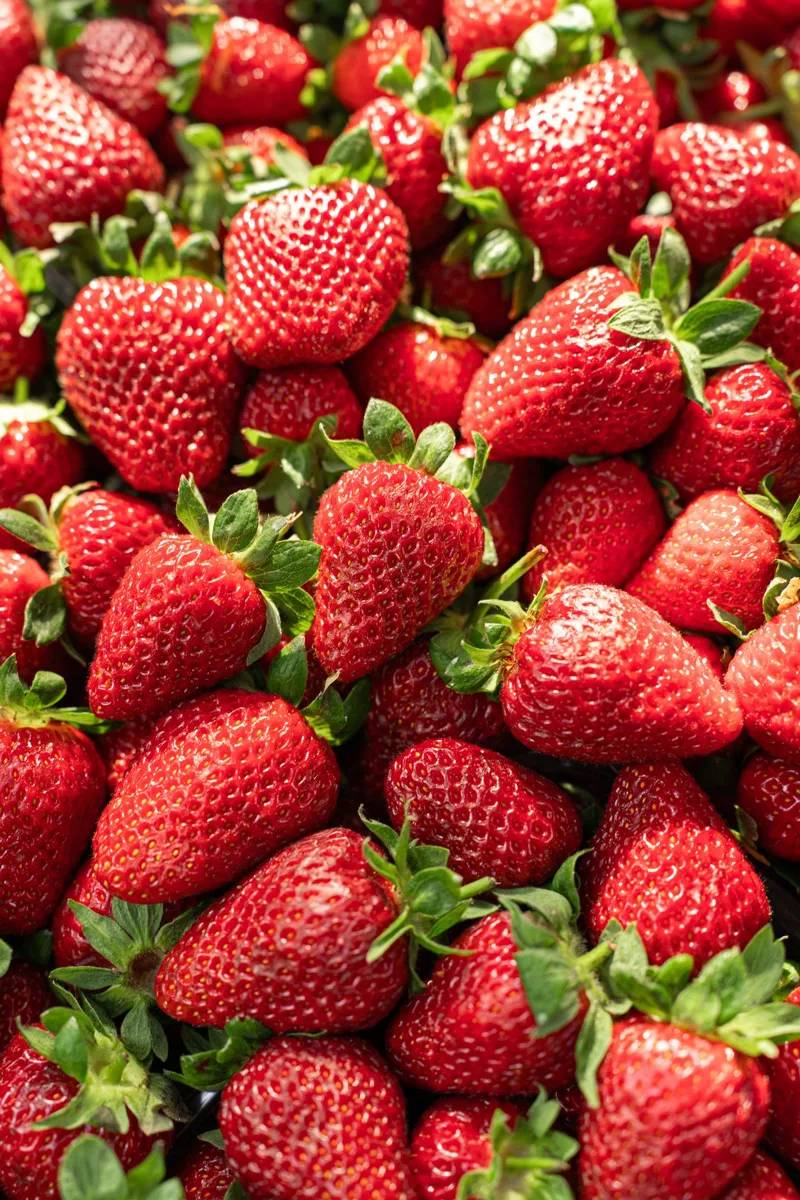
Grown in a controlled environment and harvested when ripe rather than when it suits transport. Strawberries make the farm to table case on their own.
Farm to table
Production StandardsHow strawberries would get from the farm to you.
- GrownIn a controlled environment.
- HarvestedIn small batches, kept separate.
- TestedBy an independent lab.
- TrackedEvery harvest labeled.
- DeliveredWith the batch label intact.
What’s inside strawberries.
A snapshot of why this crop is nutritionally interesting. Choose a nutrient to follow it into the body, then come back here.
Based on USDA’s strawberries, raw reference, per 100 g. This describes the reference food; it is not a measurement of a UCFarms harvest. Reference details
See every nutrient in strawberries on one chart in the Atlas
Reference nutrient amounts
Reference food: Strawberries, raw, USDA FoodData Central (SR Legacy, FDC ID 167762). These are reference values for the food, not measurements of a UCFarms harvest.
Reference data
Explore Atlas sources & evidence
Sources & references (25)
- Spinach, raw, USDA FoodData Central 168462 · U.S. Department of AgricultureSelected nutrient amounts per 100 g raw edible spinach. Reference food, not a UCFarms harvest measurement.Source details in the Atlas: Spinach, raw, USDA FoodData Central 168462Verified from the official SR Legacy JSON download. The exact food record and source calculation are available in the crop reference profiles below.https://fdc.nal.usda.gov/fdc-datasets/FoodData_Central_sr_legacy_food_json_2018-04.zip
- Collards, raw, USDA FoodData Central 170406 · U.S. Department of AgricultureSelected nutrient amounts per 100 g raw edible collard greens. Reference food, not a UCFarms harvest measurement.Source details in the Atlas: Collards, raw, USDA FoodData Central 170406Verified from the official SR Legacy JSON download. The exact food record and source calculation are available in the crop reference profiles below.https://fdc.nal.usda.gov/fdc-datasets/FoodData_Central_sr_legacy_food_json_2018-04.zip
- Watercress, raw, USDA FoodData Central 170068 · U.S. Department of AgricultureSelected nutrient amounts per 100 g raw edible watercress. Reference food, not a UCFarms harvest measurement.Source details in the Atlas: Watercress, raw, USDA FoodData Central 170068Verified from the official SR Legacy JSON download. The exact food record and source calculation are available in the crop reference profiles below.https://fdc.nal.usda.gov/fdc-datasets/FoodData_Central_sr_legacy_food_json_2018-04.zip
- Basil, fresh, USDA FoodData Central 172232 · U.S. Department of AgricultureSelected nutrient amounts per 100 g raw edible basil. Reference food, not a UCFarms harvest measurement.Source details in the Atlas: Basil, fresh, USDA FoodData Central 172232Verified from the official SR Legacy JSON download. The exact food record and source calculation are available in the crop reference profiles below.https://fdc.nal.usda.gov/fdc-datasets/FoodData_Central_sr_legacy_food_json_2018-04.zip
- Strawberries, raw, USDA FoodData Central 167762 · U.S. Department of AgricultureSelected nutrient amounts per 100 g raw edible strawberries. Reference food, not a UCFarms harvest measurement.Source details in the Atlas: Strawberries, raw, USDA FoodData Central 167762Verified from the official SR Legacy JSON download. The exact food record and source calculation are available in the crop reference profiles below.https://fdc.nal.usda.gov/fdc-datasets/FoodData_Central_sr_legacy_food_json_2018-04.zip
- Mushrooms, oyster, raw, USDA FoodData Central 168580 · U.S. Department of AgricultureSelected nutrient amounts per 100 g raw edible oyster mushroom. Reference food, not a UCFarms harvest measurement.Source details in the Atlas: Mushrooms, oyster, raw, USDA FoodData Central 168580Verified from the official SR Legacy JSON download. The exact food record and source calculation are available in the crop reference profiles below.https://fdc.nal.usda.gov/fdc-datasets/FoodData_Central_sr_legacy_food_json_2018-04.zip
- Kale, raw: FoodData Central 323505 · USDA Agricultural Research ServiceReference nutrient composition of raw kale, per 100 g edible portion.Source details in the Atlas: Kale, raw: FoodData Central 323505The audit used USDA’s Foundation Foods download. If this record link is unavailable, use the dataset or saved record below.https://fdc.nal.usda.gov/food-details/323505/nutrients
- Daily Value on the Nutrition and Supplement Facts Labels · U.S. Food and Drug AdministrationFDA Daily Values (adults and children 4+) used to compute % DV.Source details in the Atlas: Daily Value on the Nutrition and Supplement Facts Labelshttps://www.fda.gov/food/nutrition-facts-label/daily-value-nutrition-and-supplement-facts-labels
- Vitamin K: Fact Sheet for Health Professionals · National Institutes of Health, Office of Dietary SupplementsVitamin K's role in normal blood coagulation and bone protein metabolism.Source details in the Atlas: Vitamin K: Fact Sheet for Health Professionalshttps://ods.od.nih.gov/factsheets/VitaminK-HealthProfessional/
- Vitamin C: Fact Sheet for Health Professionals · National Institutes of Health, Office of Dietary SupplementsVitamin C's role in collagen synthesis, physiological antioxidant activity and immune function.Source details in the Atlas: Vitamin C: Fact Sheet for Health Professionalshttps://ods.od.nih.gov/factsheets/VitaminC-HealthProfessional/
- Vitamin A and Carotenoids: Fact Sheet for Health Professionals · National Institutes of Health, Office of Dietary SupplementsVitamin A's role in vision, immune function and cellular differentiation; provitamin-A vs non-provitamin-A carotenoids.Source details in the Atlas: Vitamin A and Carotenoids: Fact Sheet for Health Professionalshttps://ods.od.nih.gov/factsheets/VitaminA-HealthProfessional/
- Folate: Fact Sheet for Health Professionals · National Institutes of Health, Office of Dietary SupplementsFolate's role in DNA/RNA synthesis, amino-acid metabolism and cell division; Dietary Folate Equivalents.Source details in the Atlas: Folate: Fact Sheet for Health Professionalshttps://ods.od.nih.gov/factsheets/Folate-HealthProfessional/
- Manganese: Fact Sheet for Health Professionals · National Institutes of Health, Office of Dietary SupplementsManganese as an enzyme cofactor.Source details in the Atlas: Manganese: Fact Sheet for Health Professionalshttps://ods.od.nih.gov/factsheets/Manganese-HealthProfessional/
- Calcium: Fact Sheet for Health Professionals · National Institutes of Health, Office of Dietary SupplementsCalcium's role in bone structure, muscle function and nerve transmission.Source details in the Atlas: Calcium: Fact Sheet for Health Professionalshttps://ods.od.nih.gov/factsheets/Calcium-HealthProfessional/
- Vitamin B6: Fact Sheet for Health Professionals · National Institutes of Health, Office of Dietary SupplementsVitamin B6's role in metabolic and neurological functions.Source details in the Atlas: Vitamin B6: Fact Sheet for Health Professionalshttps://ods.od.nih.gov/factsheets/VitaminB6-HealthProfessional/
- Iron: Fact Sheet for Health Professionals · National Institutes of Health, Office of Dietary SupplementsIron's role in hemoglobin and myoglobin oxygen transport.Source details in the Atlas: Iron: Fact Sheet for Health Professionalshttps://ods.od.nih.gov/factsheets/Iron-HealthProfessional/
- Magnesium: Fact Sheet for Health Professionals · National Institutes of Health, Office of Dietary SupplementsMagnesium's role as an enzyme cofactor and in nerve, muscle and heart-rhythm function.Source details in the Atlas: Magnesium: Fact Sheet for Health Professionalshttps://ods.od.nih.gov/factsheets/magnesium-HealthProfessional/
- Potassium: Fact Sheet for Health Professionals · National Institutes of Health, Office of Dietary SupplementsPotassium's role in electrochemical gradients, nerve transmission, muscle contraction and heart function.Source details in the Atlas: Potassium: Fact Sheet for Health Professionalshttps://ods.od.nih.gov/factsheets/Potassium-HealthProfessional/
- Got Calcium? · U.S. government sourceSource details in the Atlas: Got Calcium?https://www.nigms.nih.gov/biobeat/2023/02/got-calcium
- Dietary Fiber: Interactive Nutrition Facts Label · U.S. government sourceSource details in the Atlas: Dietary Fiber: Interactive Nutrition Facts Labelhttps://www.accessdata.fda.gov/scripts/interactivenutritionfactslabel/assets/InteractiveNFL_DietaryFiber_October2021.pdf
- Foundation Foods JSON release 2026-04-30 · USDA Agricultural Research ServiceSource details in the Atlas: Foundation Foods JSON release 2026-04-30https://fdc.nal.usda.gov/fdc-datasets/FoodData_Central_foundation_food_json_2026-04-30.zip
- Foundation Foods Documentation · USDA Agricultural Research ServiceSource details in the Atlas: Foundation Foods Documentationhttps://fdc.nal.usda.gov/Foundation_Foods_Documentation/
- Vitamin C: Medical Encyclopedia · National Library of Medicine, MedlinePlusVitamin C, collagen and the growth and repair of skin, tendons, ligaments and blood vessels.Source details in the Atlas: Vitamin C: Medical Encyclopediahttps://medlineplus.gov/ency/article/002404.htm
- Vitamin A: Medical Encyclopedia · National Library of Medicine, MedlinePlusVitamin A helps form and maintain teeth, skeletal and soft tissue, mucous membranes and skin.Source details in the Atlas: Vitamin A: Medical EncyclopediaFunction section: "Vitamin A helps form and maintain healthy teeth, skeletal and soft tissue, mucus membranes, and skin." Reviewed 1/21/2025.https://medlineplus.gov/ency/article/002400.htm
- Dietary Supplements for Immune Function and Infectious Diseases · National Institutes of Health, Office of Dietary SupplementsVitamin A and vitamin C roles in tissue barriers and immune-cell function; distinct from evidence that supplements prevent or treat infections.Source details in the Atlas: Dietary Supplements for Immune Function and Infectious DiseasesTeaching locators: Vitamins and minerals sections, Vitamin A and Vitamin C introductions.https://ods.od.nih.gov/factsheets/ImmuneFunction-HealthProfessional/
How it supports the body.
Nutrients in strawberries play a role in these systems. Each one opens in the Atlas with its sources.
- Brain & Nervous SystemThe brain, spinal cord and nerves that carry signals through the body.
- Immune SystemThe cells and tissues that recognize and respond to what shouldn't be there.
- Cardiovascular SystemThe heart and blood vessels that move oxygen and nutrients around the body.
- Musculoskeletal SystemBones, muscles and connective tissue: structure and movement.
- SkinYour body's outer covering, also called the integumentary system. It holds fluids in, keeps out germs, lets you feel heat, cold and pain, and helps control body temperature.